On a March morning in 2022, I received a message. Would I be interested in helping write and edit a family history spanning three countries? The research was there, and so were notes, drafts, and a structure. The storytelling would be a collaboration.
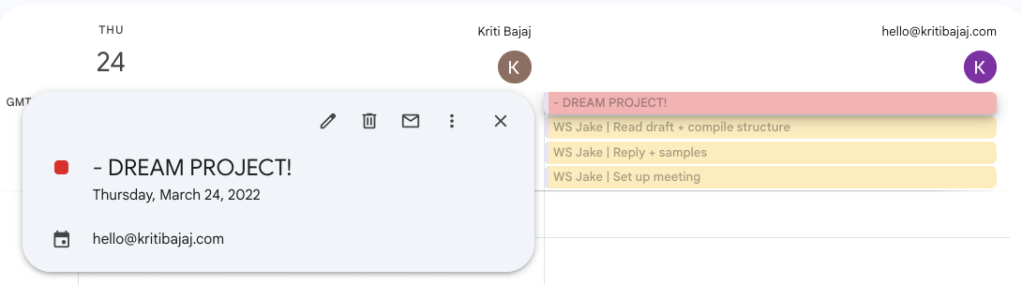
It hadn’t been long since I’d started advertising my family history services. At the time, I was pivoting into a freelance career after a decade of working with publications and auction houses as an art writer and editor. I’d figured it couldn’t hurt to put out promos for the kinds of stories I’d really love to work on. For something that was out in the ethers just on vibes (and my five-ish years of passionately researching and sharing my own family history), it sure was surreal to wake up to this dream project. It’s even enshrined in my calendar.
It worked out magically. Once I had been commissioned, I had a call with Jake Påhlman Peterson, the author and researcher of the book. We discussed his vision, the target audience, the tone and style of the writing (I especially needed to know if his family, who would inevitably read it, would appreciate my sense of humour), the main events, the process. From there, I worked on individual chapters on a Google Doc and shared them with him as I completed them. This made it super efficient and easy for us to collaborate, leave comments or questions, reply to or point out things; it’s how we still work on all our projects.
One of my favourite things was getting to browse all the family materials that he had archived – photographs, journals, newspaper clippings. We decided to begin the book with a fun quote from a family member’s journal instead of delving straight into medieval times, using it as a familiar and poignant jumping-off point and then connecting it to a vast history. The chapters were further divided into sections with succinct yet often playful titles to make the stories more accessible, providing placeholders and a shape to the narrative.

After my role was completed over a few weeks in this very collaborative process, the book went through other stages, and was published in December 2022. I received my copy a couple of months later, and felt so proud having participated in the creation of a thing of beauty with someone who put his whole heart into it. Jake was truly wonderful to work with, always open to ideas, prompt with replies, appreciative of effort, thoughtful with feedback. He later shared photos of his family with their copies of the book, and I knew I’d found my purpose.
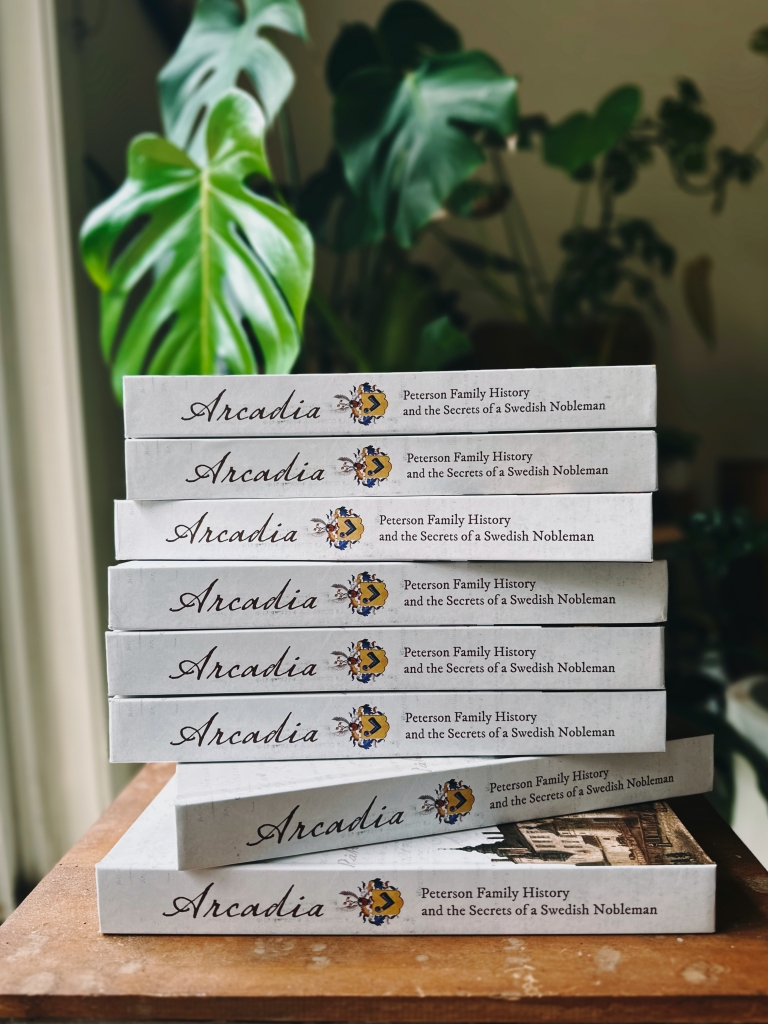
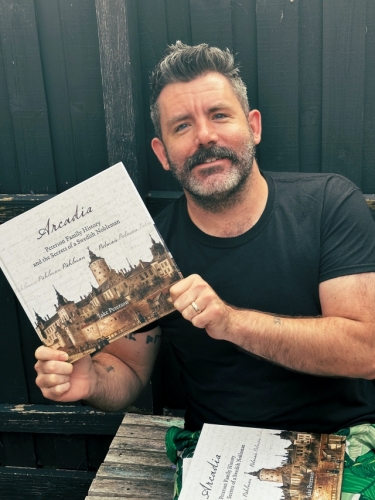
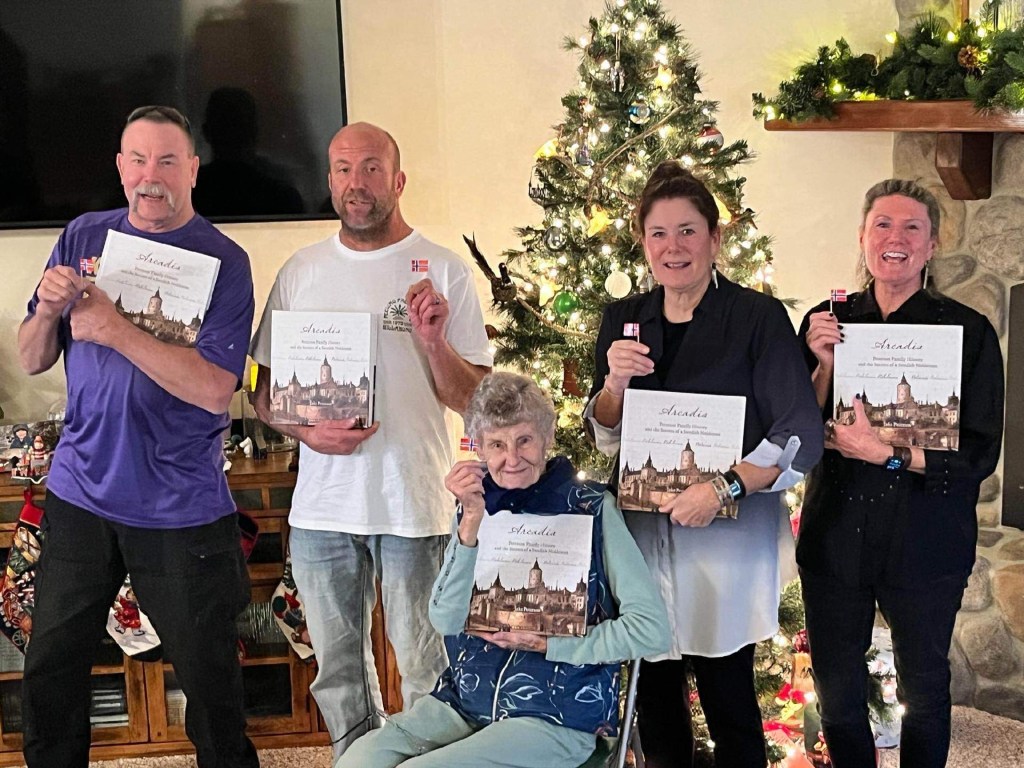
It was my honour to work on Arcadia: Peterson Family History and the Secrets of a Swedish Nobleman. In April 2023, when Jake asked me if I’d be interested in collaborating with him again on an online version of the family history that would delve into a time period prior to that of the book, I didn’t even blink before saying yes. Building that kind of trust can be hard, but it is so rewarding and worthwhile when it happens, which is why I try to give my 100% to even the smallest projects I do. It is special when that is seen, appreciated, and reciprocated.

Since 2023, I’ve been writing and editing content for Polmanarkivet, an archive of history, objects and stories of the Polman family and its branches across six centuries. In its early days, I wrote about the Polman family and individual biographies of its various members based on Jake’s genealogical research, fleshing out and structuring the life stories supported by secondary research and context. Soon, I was also diving into dramatic tales about royals and nobles, history-focused travel guides, and Swedish and Baltic historical events grand and small.
As in the beginning, we still discuss our ideas and the stories I work on, as well as other aspects of the project. Because I’m now so familiar with the family and its stories, combined with the creative freedom he gives me, it’s easy to stay motivated and excited while also keeping our larger purpose in mind. My favourite things in my work with words include the planning of new stories, coming up with cool titles for them, creating schedules and structures, and watching archives and publications of thoughtful content grow and evolve.
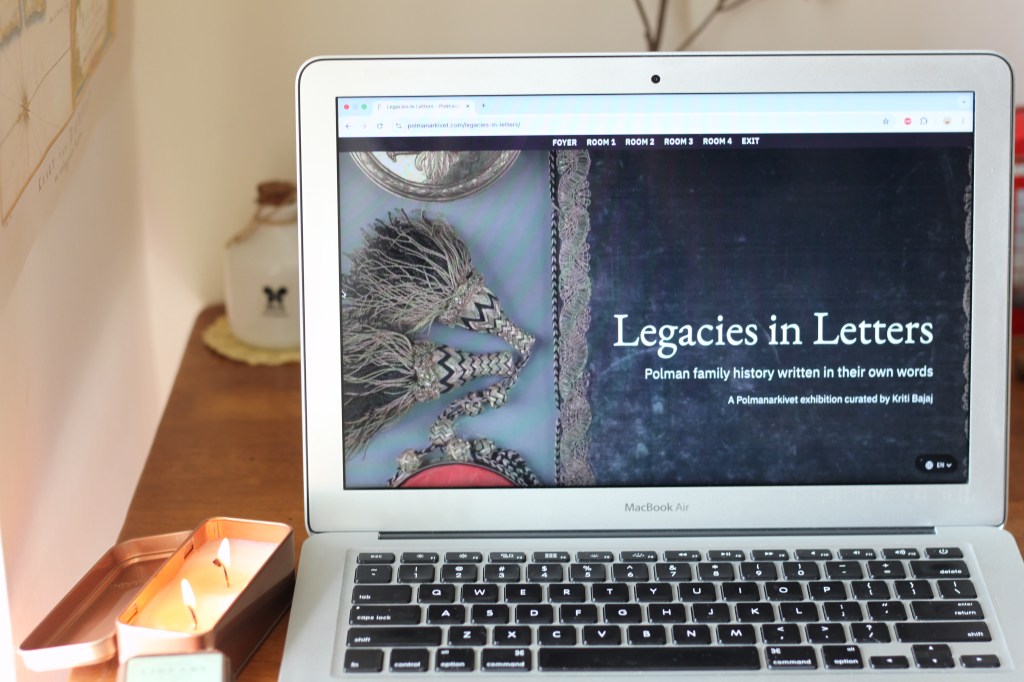
One of my recent (self-inflicted) challenges was curating the Legacies in Letters exhibition last year. Polmanarkivet has been collecting and translating various correspondences pertaining to the family, and many of these provide fascinating contexts as well as links with royals and highly influential people of the period. I wanted to write and curate an exhibition to showcase some of these epistles, and also volunteered to design it with the wonderfully intuitive software called Shorthand that we switched to last year. I’m grateful for the opportunity, platform and trust that made this virtual exhibition – my first experience with curating – happen.
Over the years, our partnership has evolved into a close friendship, with a mutual regard rooted in our passion for the past, a shared work ethic, attention to details and emotions and quality, and a steady belief in each other’s talents. I know I can always expect riveting research from him, painstakingly organised, as well as beautiful layout and website designs that rise to meet the text I write – something I’ve wished for in my entire career, and hardly ever seen. And in January, I found myself tagged in a post that still makes me sigh with happiness.
It has been a charmed four years. I look forward to many more.
Read Arcadia here, and read my interview with Jake about the process of making it here. We also had a long chat with him last year on our podcast, The Rewind.
Read all my stories for Polmanarkivet here.
Commission me to write stories for your archive or project.
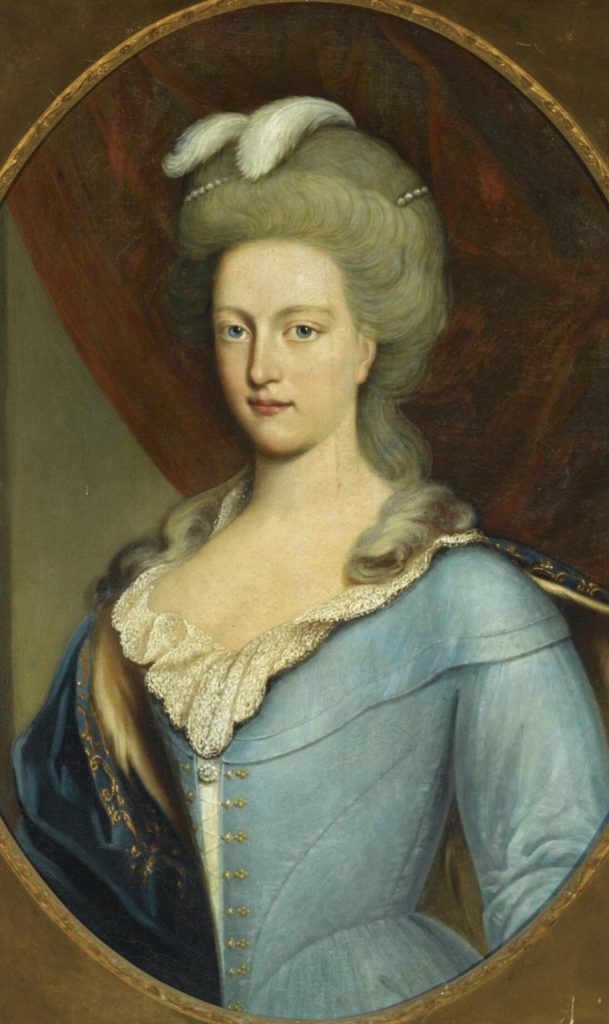
All images except the first two courtesy of Jake Påhlman Peterson and Polmanarkivet. Portrait of Jürgen Polman the Elder (d. 1641) by an unidentified painter, original painting located at Karlbergs slott. Portrait of Princess Auguste Caroline Friederike (1764-1788) by an unidentified painter, via Wikimedia Commons.

 Kriti Bajaj
Leave a reply to jaketheo Cancel reply